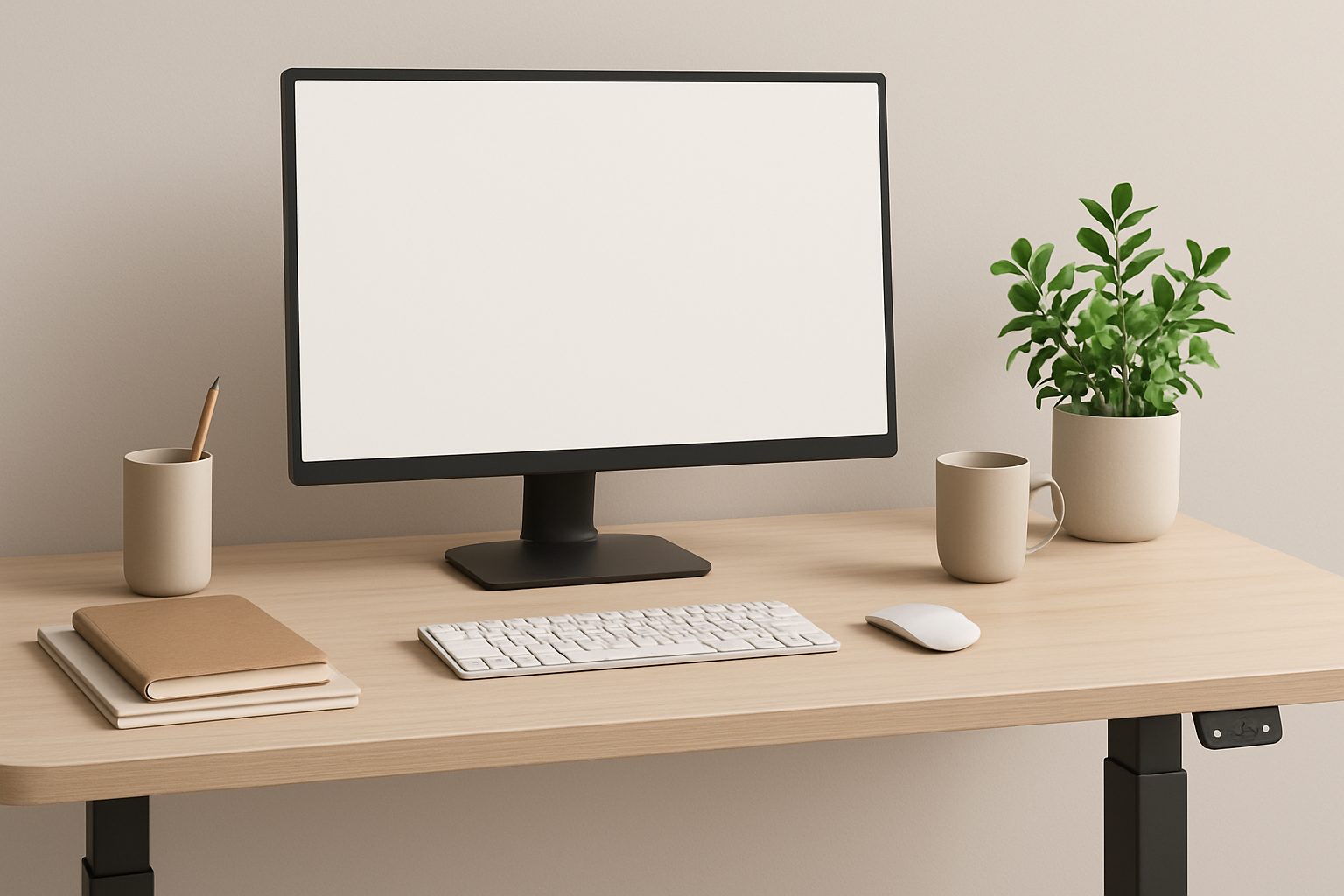
Electric Standing Desk vs Manual Hand-Crank Desk UK — Which Should You Buy?
The shift towards standing desks in UK offices is real. More people are fed up with hours hunched at fixed-height desks, and the choice between electric and manual models is the first decision most face. Both work—but they're genuinely different beasts, and picking the wrong one means a desk gathering dust in six months.
Here's what matters when choosing between them: money, effort, and how often you'll actually adjust.
Cost: The Obvious Difference
Manual hand-crank desks start around £150–£300 in the UK. A decent electric standing desk costs £400–£1,200 or more. That's a real gap, and it's why manual models appeal to budget-conscious shoppers.
But cost isn't just the upfront price. Manual desks have less to break. An electric motor, control panel, and electrical components add complexity. A manual crank won't fail after 50,000 cycles. An electric motor might—though better UK brands back theirs for 5–7 years without issue.
If you're genuinely price-limited, a manual desk gets you the health benefit of standing and sitting at zero electricity cost. But it's not a free choice—it's a trade.
Effort: Where Manual Desks Lose People
This is why most manual desks end up unused.
Adjusting a hand-crank desk takes 30–60 seconds. You grip the handle, wind it up or down, and wait. It sounds simple. It isn't—not if you're doing it five times a day. After a week, most people stop. They sit at their preferred height all morning, stand for 20 minutes at lunch, then sit again. The friction of that hand-crank means fewer transitions.
An electric desk? One button press. Two seconds. You're genuinely more likely to switch between sitting and standing throughout the day, which is the actual point.
For shared spaces (hot-desking, offices with multiple users), this matters even more. Manual desks discourage adjustment. Staff arrives, finds the desk at someone else's height, and doesn't bother changing it. Electric desks remove that friction entirely.
Reliability and Longevity
Manual desks are bulletproof if the screw mechanism is quality. No circuits, no motors, no firmware. They work or they don't, and if they don't, it's usually visible—a bent crank, a stripped screw.
Electric desks are more complex. A bad motor or control panel can mean the desk is stuck, immobile. UK brands like Flexispot, Autonomous, and Fully have improved reliability over the past five years, but they're not risk-free. That said, most failures happen within the first 18 months. If your electric desk survives that window, you're likely fine for 5+ years.
The real question: do you have recourse? Check the warranty. Many UK retailers offer 5-year motor coverage. Some don't. That difference matters.
Noise: A Underrated Factor
Manual desks are silent. Crank away, nobody hears a thing.
Electric desks make noise. Not deafening—modern ones are better than they were—but a steady hum during ascent or descent, usually 70–80 decibels. In a quiet home office, you'll notice. In an open office, your neighbours will notice. If you hot-desk or hot-share spaces, that sound gets old fast.
Cheaper electric motors are noisier. Pricier models (£600+) tend toward quiet, linear actuators. If noise matters to you—and it should in shared spaces—expect to spend more.
Desk Size and Stability
This isn't electric vs manual directly, but it's linked: electric desks tend to be larger, more robust structures. They're engineered to handle the repeated motion of an electric motor. Manual desks are often slimmer, lighter, occasionally less stable at full extension.
If you're working with thick monitors, multiple screens, or a heavy setup, an electric desk's greater stability and larger surface area matter. Manual desks work fine for light setups.
Who Should Buy Each
Choose manual if:
- You're genuinely budget-limited (under £300).
- You have a light desk setup (single monitor, minimal clutter).
- You're patient with hand-cranking five times a day.
- You want zero electrical risk or environmental concern.
Choose electric if:
- You'll actually use it (frequency of switching matters more than desk cost).
- You share the desk or hot-desk regularly.
- You want stability with a heavier setup.
- You're willing to spend £500–£900 for genuinely better daily experience.
The Real Trade-Off
Manual standing desks don't fail. They're just annoying enough that people stop using them. Electric desks require maintenance and have complexity, but they actually get used—and that's the difference that counts.
The health benefit of a standing desk only works if you switch between sitting and standing. An electric desk makes that friction-free. A manual desk makes it friction-full. After six months, that friction wins.
If you're seriously exploring electric models, read detailed reviews comparing motor noise, warranty length, and UK-specific support. Most budget options (£400–£600) deliver solid value. If you're leaning manual, commit to adjusting it regularly—otherwise, you've bought a paperweight.
More options
- Flexispot E7 Pro Electric Standing Desk (Amazon UK)
- Flexispot E5 Budget Electric Standing Desk (Amazon UK)
- FEZIBO Electric Standing Desk UK (Amazon UK)
- Duronic Electric Sit-Stand Desk UK (Amazon UK)
- Anti-Fatigue Standing Desk Mat UK (Amazon UK)