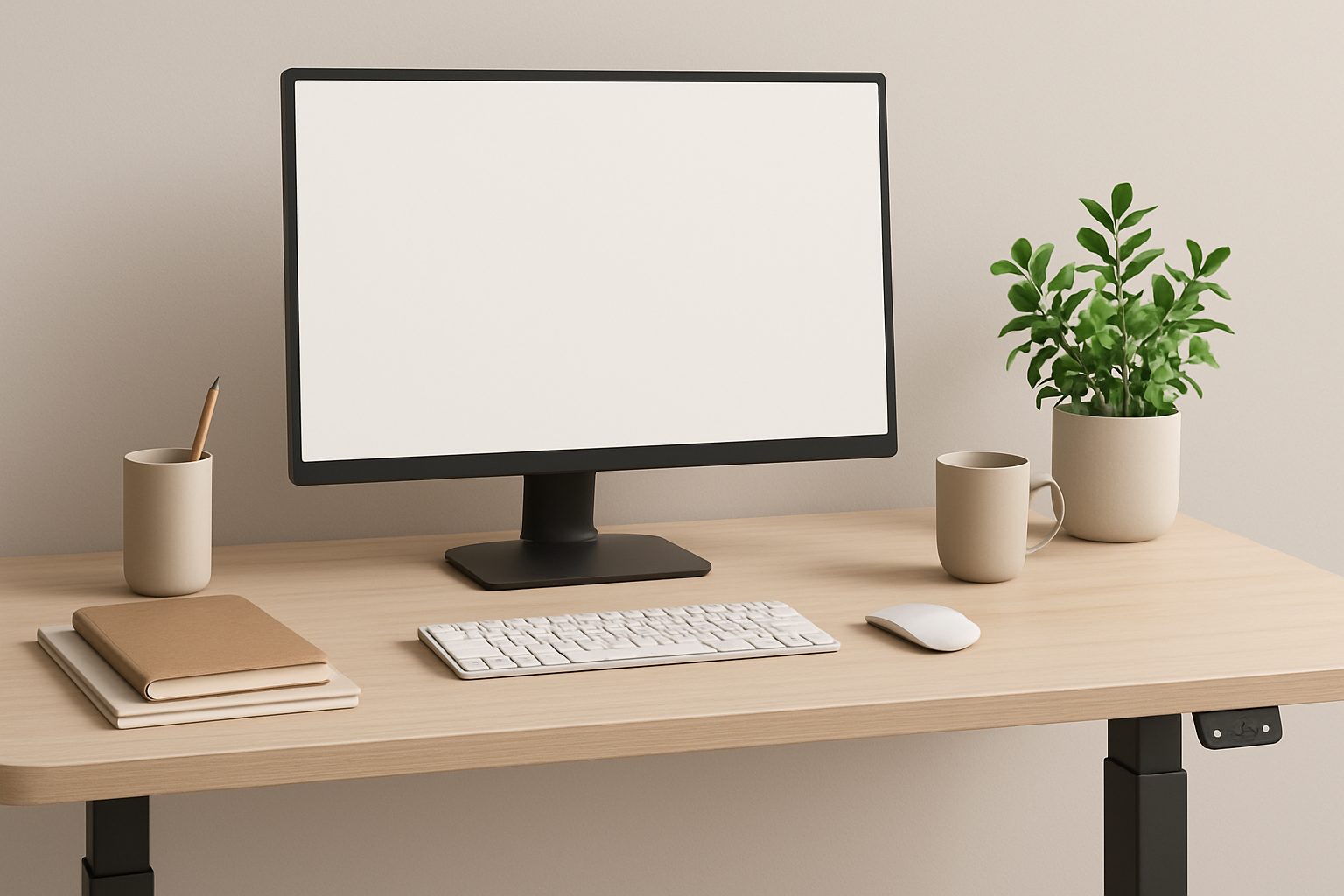
Best Electric Standing Desks for Small Spaces UK — Compact & Corner Options
Finding an electric standing desk that fits a cramped office, bedroom nook, or small apartment feels impossible—until you know what to look for. The constraint of limited space doesn't mean settling for a manual crank desk or a fixed-height table. Several UK retailers stock compact electric standing desks under 120 cm wide, and corner units that turn awkward angles into productive work zones.
The Small-Space Standing Desk Challenge
A typical office desk runs 120–150 cm wide. For a small room, that footprint eats your floorspace fast. Worse, a standard standing desk frame doesn't downsize well—the motors and legs still take up room, leaving you with a wobbly, undersized top balanced on an oversized base.
The good news: electric standing desks designed for smaller footprints exist. They use compact motor systems, narrower frames, and innovative shapes that maximise usable surface without cluttering your space.
What to Look For in Compact Models
Width and Depth
Desks under 120 cm wide work in genuinely tight spaces—think single-window home offices or fitted alcoves. If you can stretch to 140 cm, you gain legroom for keyboard, monitor, and a spare corner for papers or a small plant. Depth matters less than width, but 60 cm is usually the minimum for stability; 70 cm is more forgiving for monitor stands and cable management.
Single Versus Dual Motors
Compact desks often use single-motor systems. These work fine but move slightly slower and less smoothly than dual-motor frames. If your desk is under 100 cm wide and lightly loaded (monitor, keyboard, lamp), a single motor will manage. Dual motors shine once you add weight—multiple monitors, printers, or storage.
Frame Footprint
Narrow desks need legs that don't jut out like a playing field. Look for frames where the legs sit close to the edges. Some brands pack the motorised supports inward, leaving the full tabletop width usable. Others spread them wide, which looks ungainly and blocks legroom. Read the specifications or ask the seller before buying.
Straight Desks Under 120 cm
These are your baseline. They're cheaper than L-shaped units, easier to move, and work in tight alcoves or against single walls. Motion is smooth, cable management is straightforward, and height range is usually 70–120 cm—ample for sitting and standing.
The trade-off: you lose surface space compared to wider desks. If you need to set up two monitors, a laptop, and a desk lamp, you'll feel the squeeze. Floating shelves above the desk become essential.
L-Shaped and Corner Units
Corner desks exploit wasted space in room corners. An L-shaped electric standing desk can give you 120 cm × 120 cm of surface—more than twice the footprint of a straight 120 cm desk—without taking up more floor area. The bent shape fits the corner naturally.
The catch: motors for the return section add cost and complexity. Some L-shaped desks have motors only on the main section, leaving the return at fixed height. This is acceptable if that arm primarily holds a printer or filing trays. Others motorise both sections, which is smoother but pricier.
If you're considering an L-shaped option, check whether the frame allows adjustable widths. A few premium models let you reduce the main section from 140 cm to 100 cm, suiting different room layouts as your needs evolve.
Adjustable-Width Frames
A few electric desk frames let you alter the width of the tabletop independently of the motor. You buy a longer worktop and prop it on a narrower base, then adjust where the motors grip the top. This flexibility is rare but valuable if you might move house or reconfigure your office.
Key Considerations for Small Spaces
Height Range and Stability
Compact desks are more prone to wobble at maximum extension. Ask for the height range and wobble spec. Most should stabilise below 1 cm of sway at standing height. If the spec isn't published, that's a red flag.
Cable Management
Small desks mean cable runs are tighter. Desks with integrated grommets, cable trays, or clips sewn into the frame save headaches. Some brands offer rear-mounted power strips that mount to the frame legs—useful if your mains outlet is behind you.
Desktop Material
Cheaper models use MDF, which sags under moderate weight. Solid wood, bamboo, or thick plywood hold up better long-term, especially on narrow spans where weight concentrates. Budget at least £150–200 for the desktop alone if you want durability.
Noise
Motor noise matters in small rooms—nowhere to escape it. Single-motor desks are quieter than dual-motor frames. Read reviews from people who own the model; many mention noise levels.
Realistic Expectations
An electric standing desk under 120 cm is a genuine solution, not a compromise—provided you accept that you'll manage space more carefully than someone with a sprawling desk. Minimalism isn't optional; it's baked in. That said, a well-chosen compact desk can feel spacious and functional if layout is thoughtful.
Corner and L-shaped units offer more breathing room for the same floor footprint. They're brilliant if your room has an unused corner. Adjustable-width frames add future-proofing, though they command a premium.
Next Steps
Search Amazon UK for "compact electric standing desk" or "corner standing desk" to compare available stock, prices, and delivery times. Look for models under 120 cm width with at least two-star reviews mentioning stability and noise. If you're drawn to L-shaped options, read our dedicated guide on corner standing desks to explore configurations and motor setups in more depth.
More options
- Flexispot E7 Pro Electric Standing Desk (Amazon UK)
- Flexispot E5 Budget Electric Standing Desk (Amazon UK)
- FEZIBO Electric Standing Desk UK (Amazon UK)
- Duronic Electric Sit-Stand Desk UK (Amazon UK)
- Anti-Fatigue Standing Desk Mat UK (Amazon UK)