Best Electric Standing Desks for Home Office UK 2025
If you're setting up a home office in a spare bedroom or compact space, an electric standing desk can transform how you work—but the right model matters. Standing desks aren't one-size-fits-all, especially when space is tight and noise from constant adjustments will echo through a small room. This guide focuses on what actually matters for UK home workers: quiet motors, realistic dimensions, and designs that don't dominate a modest room.
Why Standing Desks Matter for Home Offices
The research is clear: alternating between sitting and standing reduces back pain and improves circulation. But there's a gap between understanding this and actually using a standing desk. In a home office, the difference between a loud, jerky desk you'll avoid adjusting and a smooth, whisper-quiet one you'll use throughout the day is significant.
Home environments also demand aesthetic consideration. Your desk will be visible during video calls and needs to fit within a room that serves other purposes. That industrial frame you see in corporate offices might clash with your bedroom décor or make a small space feel cramped.
Motor Noise: The Overlooked Factor
This is where many budget standing desks disappoint. A cheap motor that whirs loudly every time you adjust encourages you to stay in one position, which defeats the purpose. Spend a bit extra for dual motors with quality bearing systems—they're quieter and more stable, especially important if you have housemates or family nearby.
Quality motors typically operate between 50–65 decibels. Think of it this way: that's roughly the sound level of a normal conversation. Poor motors hit 70–80 decibels, more like a busy office. If you're testing desks in a showroom, always listen to the motor in action under full load—move the desk up and down several times.
Footprint and Room Considerations
A spare bedroom or corner of a living room has limited floor space. Standard office desks measure 1200–1400mm wide, which works well for most home setups. Depth is trickier: office-standard 800mm depth leaves minimal space behind your chair, making the room feel cramped. Look for 650–750mm depth models if you're space-conscious—still comfortable to work on, but doesn't dominate the room.
Height range matters too. Most decent electric desks adjust from approximately 700mm to 1200mm, accommodating both seated and standing positions comfortably. Verify the standing height works for your frame—at standing desk height, your elbows should bend at roughly 90 degrees when arms are at rest.
Colour and Design Options
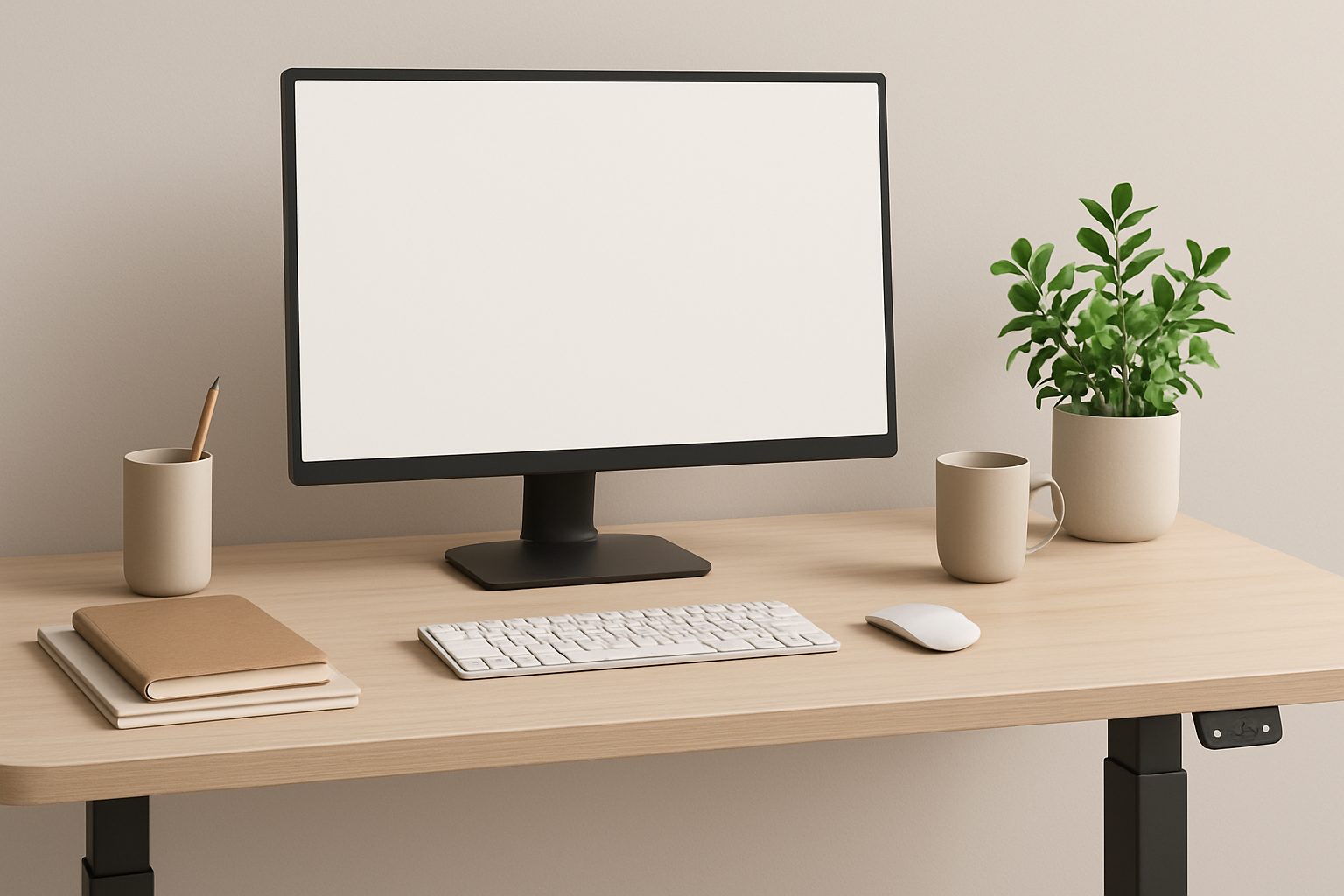
Unlike the sea of grey and black desks you'll find in corporate settings, UK suppliers increasingly offer standing desks in white, natural oak, and even softer colours like soft grey or sage. A white or light wood desktop reflects more light in a spare room, making the space feel larger. Dark finishes can work beautifully if the rest of your room uses contrasting elements.
Consider the frame design too. Minimalist, clean-lined frames look intentional and designed, whereas ornate or overly chunky frames read as afterthoughts. In a home setting, this matters: you're looking at this desk for hours daily, and it's visible on video calls.
Cable Management and Cord Routing
This detail separates tidy setups from chaotic ones. A decent electric standing desk includes a cable tray or clips built into the frame to run your monitor, keyboard, and power cables tidily. This prevents the dreaded "spaghetti behind the desk" and makes adjusting height without tangling cables far simpler.
Look for desks with integrated cable routing along the legs—it's a small feature that makes daily use genuinely better. Some models include USB ports and charging sockets built into the desktop or frame, reducing the number of cables you need at all.
Stability and Wobble
Here's a practical test: push the desk horizontally at standing height. Quality dual-motor desks with proper cross-bracing are nearly immobile. Budget single-motor desks sometimes wobble, which is annoying when you're typing and genuinely dangerous if you spill hot drinks. Wobble also makes the motor work harder, shortening its lifespan.
The frame should feel like it's anchored to the ground, not just balanced. This is one area where it's worth feeling a desk in person before buying—UK retailers and showrooms usually have models on display.
Dual Motors vs. Single Motor
Dual motors cost more but are worth it for home use. They keep the desktop level as you adjust height (preventing that tilting sensation), operate more quietly, and distribute load evenly across the frame. With a single motor, one side of the desk rises faster than the other, which feels strange and stresses the mechanism.
Realistic Budget
A solid electric standing desk for a UK home office sits between £400 and £800. Below £400, you're usually compromising on motor quality, frame stability, or both. Above £1,200, you're often paying for features designed for commercial offices—premium finishes, integrated collaboration tech, or stylish branding.
Mid-range desks (£500–£700) typically offer the best value: whisper-quiet dual motors, sturdy frames, clean design, and modest colour options.
Making the Most of Your Desk
An electric standing desk is only effective if you actually use it. Set a timer or use a standing desk app to remind yourself to adjust every 45 minutes. Pair your desk with a decent chair, and invest in a footrest for standing sessions—your lower back will thank you.
Complement your setup with accessories designed for standing work: a monitor arm to position the screen at eye level (critical for avoiding neck strain), a keyboard tray to keep wrists neutral, and anti-fatigue mats that make standing more comfortable during longer periods.
For guidance on selecting the right accessories to complete your standing desk setup, see our dedicated accessories article, which covers monitor arms, footrests, and ergonomic add-ons suited to compact home offices.
More options
- Flexispot E7 Pro Electric Standing Desk (Amazon UK)
- Flexispot E5 Budget Electric Standing Desk (Amazon UK)
- FEZIBO Electric Standing Desk UK (Amazon UK)
- Duronic Electric Sit-Stand Desk UK (Amazon UK)
- Anti-Fatigue Standing Desk Mat UK (Amazon UK)